The Rise of Smart Cities and Their Impact on Global Real Estate Investment
By Mehreen Fayaz • Mon Mar 02 2026
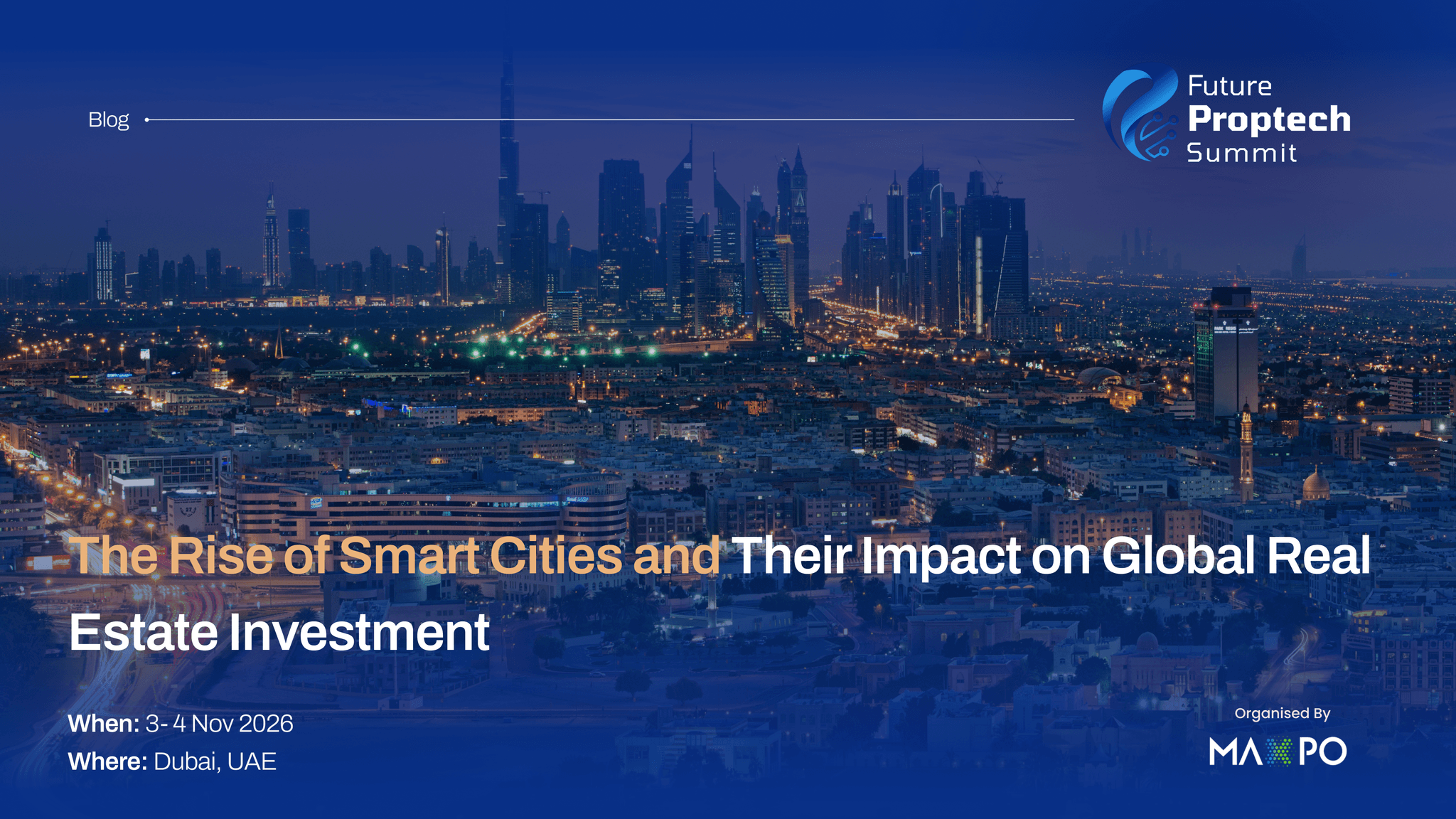
The rise of smart cities is transforming global real estate investment in 2026, shifting the focus from traditional brick-and-mortar development to fully integrated, technology enabled urban ecosystems. Smart cities are built around digital infrastructure, artificial intelligence, IoT connectivity, renewable energy integration, and data driven governance. These elements work together to create efficient, sustainable, and future ready environments. For real estate investors, this evolution represents more than innovation, it signals a structural shift in how long-term property value is created and protected.
Unlike conventional urban expansion, smart cities rely on continuous data collection and analysis. Sensors embedded across transport systems, utilities, commercial districts, and residential buildings generate real time insights into usage patterns and performance metrics. City administrators use this intelligence to optimize energy distribution, traffic management, public safety, and zoning decisions. For property investors, such efficiencies translate into stronger tenant satisfaction, lower operational risks, and enhanced capital appreciation potential. Data transparency reduces uncertainty, making smart city real estate particularly attractive to institutional capital.
Global hubs in the Middle East are at the forefront of this transformation. In the United Arab Emirates, cities like Dubai are embedding AI driven mobility systems, blockchain-enabled land registries, and smart building standards into strategic frameworks such as the Dubai 2040 Urban Master Plan. This long-term blueprint outlines sustainable housing growth, integrated community planning, and infrastructure expansion aligned with population forecasts. For investors, such clarity in urban planning reduces development risk while strengthening confidence in long-term market stability.
Similarly, in Saudi Arabia, visionary mega-projects like NEOM are redefining what digitally integrated urban living looks like. Designed as a renewable-powered ecosystem with advanced mobility networks and AI-supported services, NEOM represents a new generation of master-planned real estate. These large-scale initiatives combine government backing, infrastructure certainty, and economic diversification strategies key drivers that attract global investors seeking exposure to high-growth, policy-supported markets.
At the asset level, smart city integration enhances operational efficiency and ESG performance. AI-powered building management systems monitor and optimize heating, cooling, lighting, and water consumption in real time. This reduces operating costs while improving sustainability metrics, a critical factor as ESG investing becomes central to global capital allocation. Properties within smart districts often command premium valuations due to enhanced connectivity, environmental standards, and tenant experience.
Smart mobility and transit-oriented development further strengthen investment fundamentals. Integrated transport systems including electric vehicle networks and high-speed transit corridors create high-demand clusters for residential, retail, and commercial assets. Investors benefit from increased foot traffic, higher occupancy rates, and diversified revenue streams across mixed-use developments. Connectivity is no longer just a convenience; it is a core driver of property value.
Looking ahead, the convergence of AI in real estate, sustainable urban development, and digital infrastructure investment will continue to accelerate smart city expansion worldwide. Digital twins and advanced predictive modeling tools will enable developers to simulate urban growth scenarios before construction begins, reducing costly errors and improving return projections. As global urban populations expand and technology integration deepens, smart cities are positioned to absorb growth in a more structured and sustainable manner.
In an increasingly competitive and capital-intensive global property landscape, smart cities are not merely urban experiments, they are strategic investment ecosystems. By combining technology, sustainability, regulatory efficiency, and long-term infrastructure planning, they are redefining how real estate value is generated and scaled. For investors seeking resilient, future-ready assets, smart city real estate stands out as one of the most compelling opportunities of the decade.