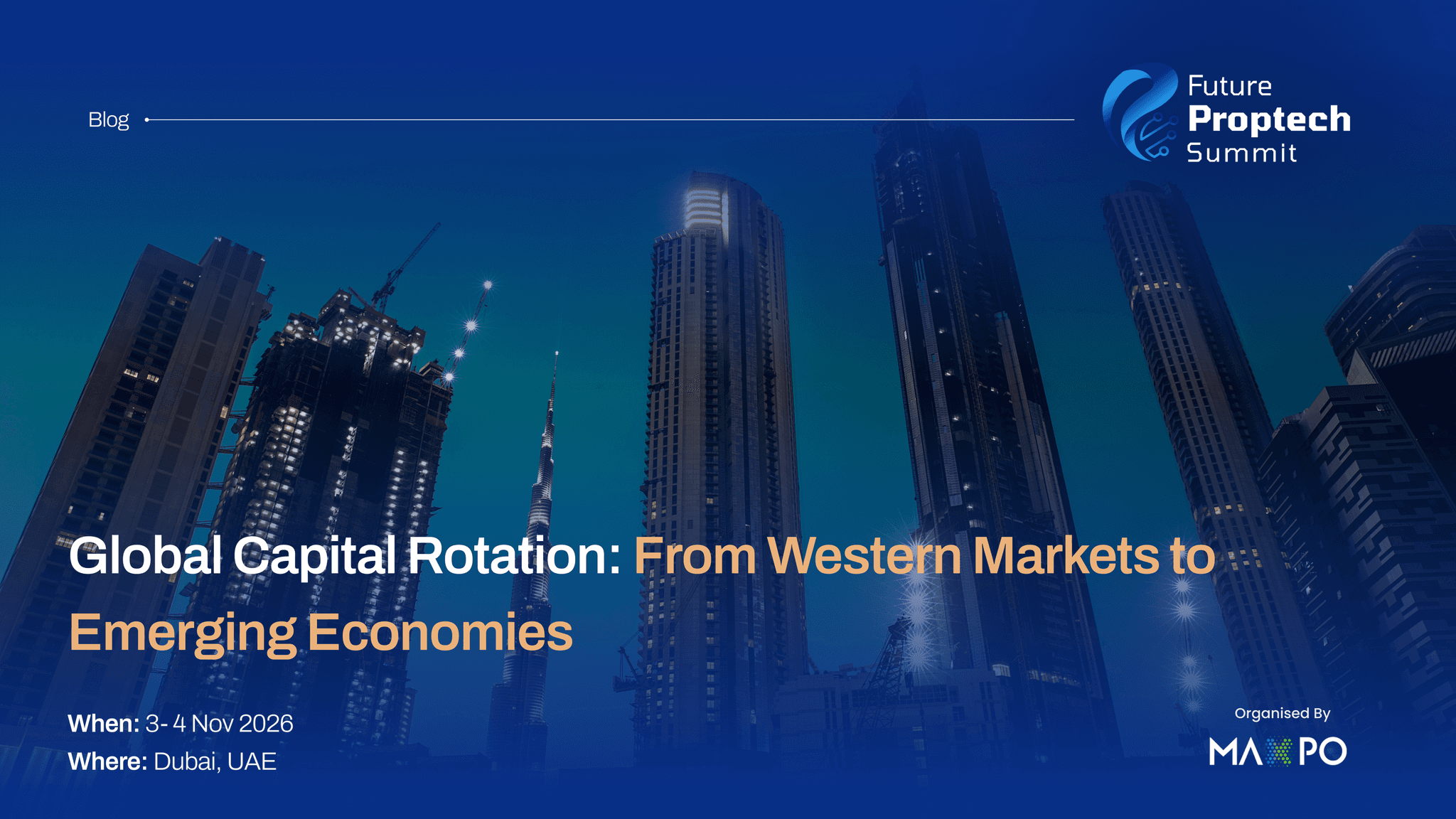
Global Capital Rotation: From Western Markets to Emerging Economies
By Mehreen Fayaz • Tue Mar 03 2026
lobal real estate investment is undergoing a significant shift in 2026. Institutional investors, private equity firms, and sovereign wealth funds are increasingly reallocating capital away from traditional Western markets toward high-growth emerging economies. This global capital rotation is driven by rising interest rates in mature markets, compressed yields, regulatory pressures, and slower economic growth. In contrast, emerging regions are offering stronger rental yields, infrastructure expansion, demographic growth, and government-backed development strategies making them attractive alternatives for long-term real estate investment.
For years, cities like New York, London, and major European capitals dominated cross-border property investment. However, as asset prices peaked and financing costs increased, investors began searching for markets with better growth fundamentals and higher return potential. Today, capital flows are increasingly targeting the Middle East and other emerging economies where economic diversification, population expansion, and smart infrastructure investment are creating new real estate corridors. Countries such as the United Arab Emirates and Saudi Arabia have positioned themselves as prime beneficiaries of this shift.
In the UAE, cities like Dubai continue to attract global investors due to tax-efficient policies, foreign ownership frameworks, and strong demand across residential, hospitality, and commercial sectors. Large-scale master plans such as the Dubai 2040 Urban Master Plan provide long-term infrastructure clarity, reducing investment uncertainty. Meanwhile, Saudi Arabia’s transformation under Saudi Vision 2030 is accelerating giga-project development, tourism expansion, and economic diversification. Mega initiatives like NEOM are drawing institutional capital seeking exposure to next-generation smart cities and sustainable urban ecosystems.
Higher yields are a central driver of this capital reallocation. Emerging markets often offer stronger rental returns compared to saturated Western hubs, particularly in fast-growing residential and logistics segments. Additionally, demographic trends including youthful populations, urban migration, and expanding middle classes support long-term housing demand and retail consumption. Infrastructure-led growth, including new airports, rail networks, and business districts, further enhances asset appreciation potential.
Another factor behind global capital rotation is diversification. Investors are increasingly seeking geographic balance to reduce portfolio concentration risk. Allocating capital to emerging markets provides exposure to different economic cycles and growth drivers. Government-backed reforms, digital land registries, and streamlined foreign investment regulations in markets like the GCC are strengthening transparency and investor protection, making cross-border allocations more secure.
Looking ahead, global capital rotation is likely to continue as investors prioritize growth, yield, and structural transformation over legacy market stability alone. Emerging economies that combine economic diversification, regulatory reform, infrastructure investment, and technological innovation will remain key destinations for institutional real estate capital.
In 2026, the global property landscape will no longer be dominated solely by traditional Western hubs. Capital is becoming more agile, more data-driven, and more opportunity-focused. As emerging markets strengthen their regulatory frameworks and accelerate urban development, they are transforming from alternative plays into core components of global real estate portfolios redefining where and how long-term property value is created.