From Smart Buildings to Digital Twins: The Next Frontier in Real Estate Innovation
By Nazish Shah • Sat Jun 28 2025
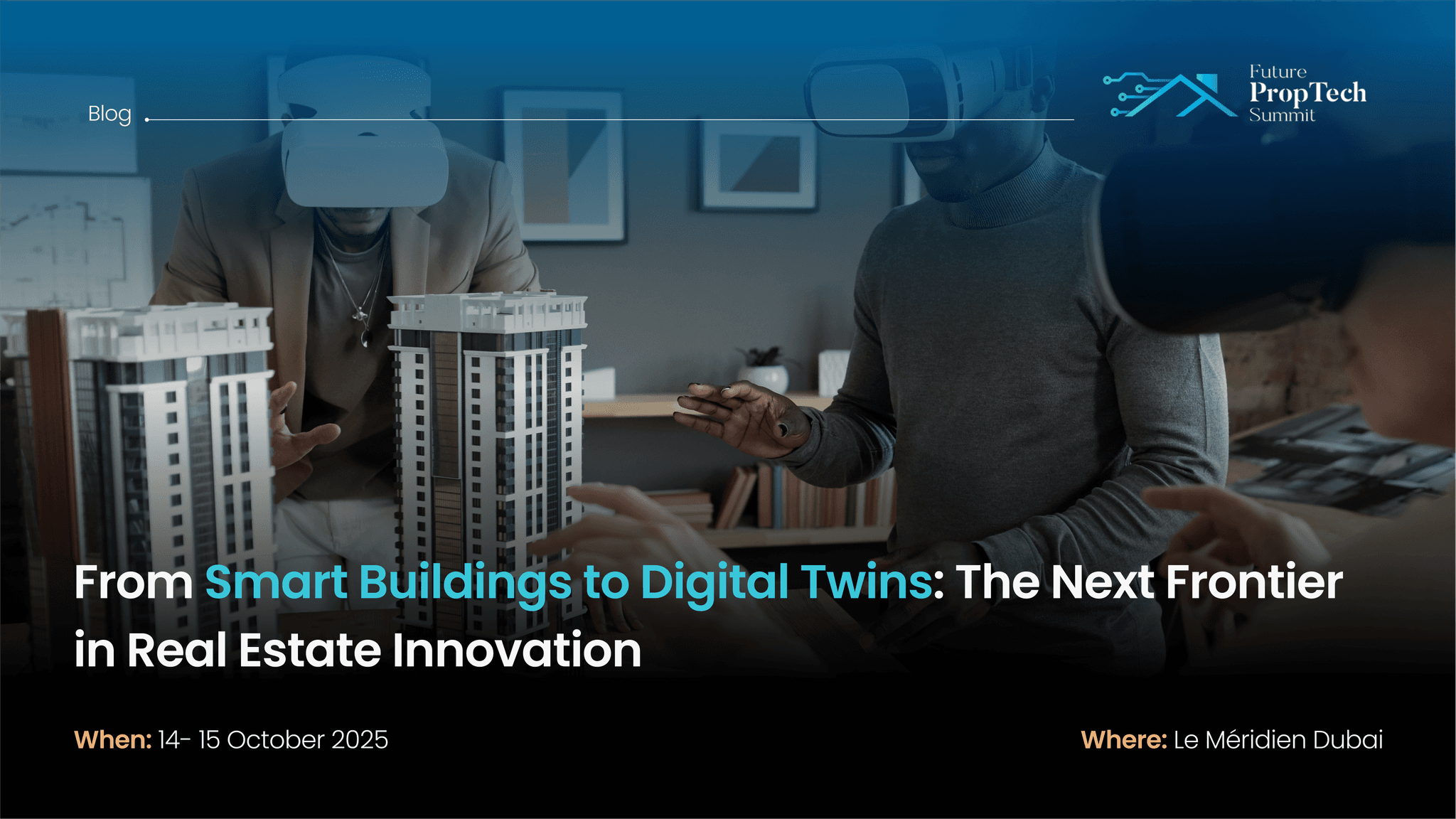
Real estate is experiencing a sea of change in the age of digitalization. As technology continues to evolve and the cost of ubiquitous sensors continues to drop, smart buildings have emerged as a game-changing trend of the last decade and increasingly use sensors, automation and Internet of Things (IoT) technology to operate more efficiently, sustainably and to provide an overall better experience for building occupants. But a new wave of innovation is coming, which will be about more than automating. Welcome to the age of digital twins, the next frontier in real estate tech.
Smart buildings incorporate IoT devices, automation, and data analytics that allow real-time monitoring, live data on building operations and control building concerns such lighting, HVAC, and energy systems among other. The buildings are also highly energy-efficient, lowering operational costs and increasing user comfort.
According to market research, the global smart building market is projected to reach over USD 120 billion by 2026. This growth reflects not only demand from real estate developers and facility managers but also from governments pushing for greener infrastructure.
The global smart building market was valued at USD 96.96 billion in 2023 and is projected to reach USD 355.6 billion by 2030.Smart buildings can reduce energy consumption by up to 30%, resulting in significant cost savings and environmental benefits.Despite these advantages, smart buildings are largely confined to current-state monitoring and automation. They lack the ability to fully simulate future scenarios or predict long-term outcomes. This is where Digital Twins come into play.
A Digital Twin is a real-time, virtual representation of a physical object, such as a building or infrastructure, which is maintained and continuously updated in real-time with input from multiple embedded sensors as well as from AI and machine learning. Digital Twins, unlike models, are not static. They know, mimic and forecast the behavior and performance of their real-world counterparts.
Digital Twins offer transformative benefits for the real estate industry by enhancing operational efficiency and sustainability. One of the key advantages is predictive maintenance, where continuous monitoring of equipment and infrastructure enables early detection of wear, faults, or failures, reducing downtime and cutting maintenance costs. They also facilitate space optimization by analyzing live occupancy and behavioral data, allowing organizations to reconfigure layouts, identify underutilized areas, and create user-centric environments, particularly important in today’s hybrid work settings. In terms of energy and sustainability management, Digital Twins simulate energy flows and performance, helping buildings comply with green standards and accelerating their journey toward Net Zero targets. Moreover, they drive capital and operational efficiency; according to Deloitte, assets powered by Digital Twin technology can achieve 10 - 15% reductions in capital expenditures and 15 - 20% savings in operational costs, maximizing the total lifecycle value of a property.
Beyond individual buildings, the next evolution involves Urban Digital Twins, comprehensive virtual models of entire neighborhoods or cities. These systems are increasingly employed for Urban mobility and traffic flow planning, emergency preparedness and disaster simulations and sustainability performance tracking and benchmarking.
This expansion is fueling robust market growth. The global Digital Twin market is forecasted to grow from USD 17.6 billion in 2023 to USD 137 billion by 2030, with real estate and urban planning among the top sectors driving demand.
However, for all their promise, the implementation of Digital Twins faces a series of obstacles, among which:
Significant Initial Investment: The investment to develop and implement Digital Twins is significant and there are high system deployment integration efforts.Data Privacy and Ownership:The use of real-time data gives rise to developing concerns such as cybersecurity and proprietary information.Skills Gap: Traditional real estate stakeholders may lack the technical expertise to manage and leverage Digital Twin technologies.These challenges are being addressed through Open-source platforms and standardized data protocols, cross-sector collaboration between real estate firms and technology providers and training initiatives and workforce reskilling programs.
The convergence of AI, AR/VR, and 5G is set to further advance the capabilities of Digital Twins, turning them into immersive, interactive environments. Key trends to watch include:Twin-as-a-Service (TaaS): Cloud-based models offering scalable digital twin services to smaller developers and facility operators.Blockchain Integration: Secure and transparent management of smart contracts, digital records, and transactional data.Metaverse-Ready Assets: Buildings designed with dual existence in physical and virtual spaces, enabling stakeholders to experience and interact with properties before construction.
The evolution from smart buildings to Digital Twins marks a pivotal shift in the real estate industry. This transformation reflects a broader movement from static infrastructure to intelligent, responsive ecosystems. As cities become more connected and sustainability takes center stage, Digital Twins offer a powerful tool for developers, asset managers, and urban planners to drive innovation, efficiency, and resilience.